

Italy’s long promised bridge to Sicily has not yet connected Sicily to the mainland.
It has, however, successfully connected politics, prosecutors, court officials, environmental law, procurement rules, organized crime fears, European Union compliance, and a national tradition of announcing huge projects before reality has been fully consulted.
A bridge may or may not appear eventually. A scandal, naturally, arrived on schedule.
Rome prosecutors have opened a corruption and official secrets investigation linked to the Strait of Messina bridge, a proposed €13.5 billion project that Prime Minister Giorgia Meloni and Infrastructure Minister Matteo Salvini have treated as a symbol of national ambition. According to Italian and international reporting, investigators are examining whether a retired judge from Italy’s Court of Auditors allegedly provided confidential information and support related to the bridge approval process in exchange for help securing a desirable public sector role after retirement.
This is the point where a normal infrastructure story would involve soil studies, traffic models and boring men in reflective vests.
Italy, bravely refusing to be normal, has given us a plot involving a mega bridge, a powerful court, alleged secret leaks, possible job promises, environmental objections, old contracts, political fury and enough procedural complexity to make a tax lawyer consider farming.
The suspects identified in Italian reporting include Tommaso Miele, a retired senior figure at the Court of Auditors, Giacomo Francesco Saccomanno, a lawyer and former board member of Stretto di Messina, and businessman Vincenzo Virgiglio. Prosecutors allege that confidential information connected to the court’s internal review process may have been shared improperly. No one has been convicted. The allegations remain allegations.
That matters. It is also the kind of sentence lawyers make everyone write while journalism quietly dies of thirst.
The company responsible for the project, Stretto di Messina, has denied involvement in the alleged facts and said it is ready to cooperate with investigators. That is the standard institutional response, somewhere between “we know nothing” and “please do not put our logo near this mess.”
The timing is especially disastrous for the government because the bridge was already not exactly gliding across a frictionless surface. In October 2025, Italy’s Court of Auditors refused to validate the approval package for the project, dealing a major blow to the Meloni government’s attempt to move the project from political promise to actual construction. The court later raised concerns involving European environmental rules and public procurement regulations, including whether the old 2005 tender could still be used after years of delays, changes and cost increases.
If the court’s objections stand, the project may need a fresh tender.
For a government that wants to present the bridge as a decisive national breakthrough, “please go back and do the paperwork again” is not exactly the heroic poster image.
Meloni reacted angrily to the court setback, calling it an intolerable intrusion. Salvini called it a political decision. This is how infrastructure works now. First comes the engineering. Then the legal review. Then the minister accuses the review of having ideological vibes.
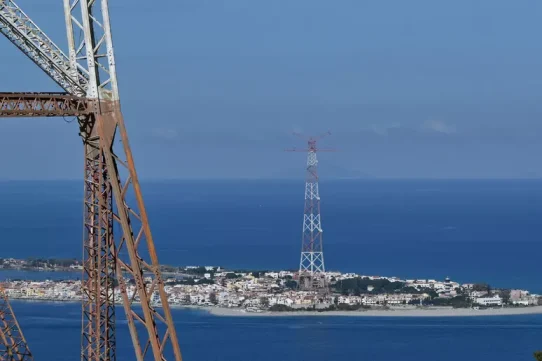
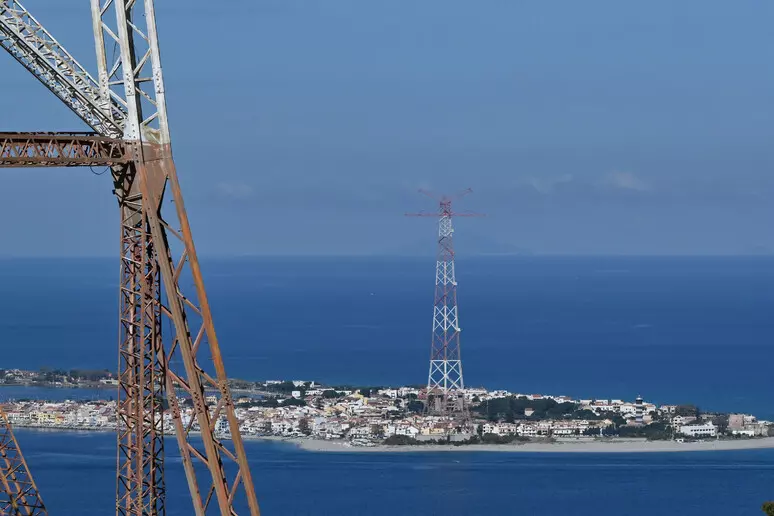
The bridge itself is enormous. The planned structure would stretch roughly 3.7 kilometers across the Strait of Messina, linking Sicily to Calabria. Its central span would be about 3.3 kilometers, making it the longest suspension bridge in the world if completed. The design includes road lanes, railway tracks and towers nearly 400 meters high.
In other words, Italy is not trying to build a cute little local crossing.
It is trying to suspend a national argument over seawater and call it development.
Supporters say the bridge would transform transport links, boost southern Italy, reduce travel times, support freight movement and finally connect Sicily more directly to the mainland. They describe it as strategic, modernizing and overdue.
Critics say the project is expensive, environmentally risky, legally shaky, seismically worrying, vulnerable to corruption and not even the thing southern Italy most urgently needs.
Both sides agree on one point: it is large.
That may be the only stable fact in the entire debate.
The history of the bridge is almost comic in its persistence. Italy first solicited proposals for a fixed link across the strait in the late 1960s. A legal framework followed in the early 1970s. The Stretto di Messina company was created in 1981. A consortium was selected in 2005. The project was halted in the early 2010s. Then Meloni’s government revived it in 2023.
At this point, the bridge has existed for so long as a promise that it should probably be eligible for a pension.
Every generation gets its version of the same announcement. The bridge is coming. The bridge is strategic. The bridge will transform the south. The bridge will be built soon. The bridge is being reviewed. The bridge is delayed. The bridge is too expensive. The bridge is back. The bridge is blocked. The bridge is legally complicated. The bridge is definitely still happening.
Italy has not built the bridge, but it has perfected the ritual of almost building it.
Salvini has made the project one of his signature causes. For him, it is proof that Italy can finally execute a grand national infrastructure dream. It is also proof that politicians love a project large enough to be photographed from space but vague enough to absorb decades of speeches.
Meloni has tied the bridge to national development and southern growth. Her government has cast it as a strategic priority, part of a larger effort to modernize infrastructure and strengthen Italy’s role in European transport networks.
The bridge also sits within the European Union’s broader transport geography. It is connected to discussions around the Scandinavian Mediterranean corridor, one of those vast EU planning concepts that sounds less like infrastructure and more like a board game designed by civil servants. Brussels has supported some rail design work connected to the project, though that is not the same as paying for the whole bridge.
And that distinction matters because EU rules are now one of the project’s biggest headaches.
The Court of Auditors raised objections linked to environmental law, especially around protected habitats and marine ecosystems. The Strait of Messina is not an empty stretch of water waiting politely for concrete. It is an ecologically sensitive area between Sicily and Calabria, with coastal and marine zones that trigger European environmental safeguards.
The government and project company argue that the bridge has passed important environmental assessment steps with conditions attached. Critics argue that those conditions and the use of public interest arguments do not magically erase the environmental risks. Nature, annoyingly, does not always accept press releases.
Then there is the procurement problem.
The bridge project relies heavily on old contracting history, especially the 2005 selection of the Eurolink consortium, led by Webuild. But costs, financing, design circumstances and legal frameworks have changed over time. The Court of Auditors and Italy’s anti corruption authority have questioned whether proceeding under the old setup is still acceptable or whether a new tender is needed.
That is not a small technicality. A new tender would mean delay, uncertainty and possibly higher costs.
It would also threaten the political fantasy that construction can begin simply because a minister keeps saying it will.
The project’s estimated cost now stands around €13.5 billion. In official and company material, supporters point to potential economic benefits, faster transport, job creation and long term growth. Project backers argue the investment will generate wider gains for Sicily, Calabria and Italy as a whole.
Opponents hear the same number and ask why a region struggling with water systems, rail quality, hospitals, schools and everyday public services needs a world record suspension bridge before it gets basic reliability.
That is the uncomfortable social question underneath the engineering debate.
Is the bridge a solution to southern Italy’s problems, or is it a monument built over them?
The answer depends on whom you ask. To supporters, it is a missing link, a bold investment and a chance to end Sicily’s isolation. To critics, it is a political trophy, a fiscal risk and a distraction from unglamorous repairs that would not look as impressive in campaign videos.
Politicians like mega projects because mega projects photograph well. Nobody cuts a ribbon in front of improved maintenance schedules and gets applause from the nation.
A bridge, by contrast, has drama. Height. Steel. Renderings. Animation videos. Speeches about the future. The future, as usual, does not get to comment.
The alleged corruption investigation now adds a sharper concern. The Court of Auditors is not just another bureaucratic stop on the route. It is a legal gatekeeper. It checks whether government spending and approval acts comply with the law. If prosecutors are right that someone tried to influence its review from the inside, then the scandal is not just about one project. It is about the integrity of institutional control itself.
That is why this case is politically radioactive.
The government can argue that the bridge should be built. It can argue that courts are too cautious. It can argue that critics are blocking development. It can argue that the south needs big investment.
But once a criminal probe enters the room, the argument changes. Suddenly the question is not only whether the bridge is useful, affordable or environmentally defensible. It becomes whether the process around it is clean.
And with Italian public works, that question tends to arrive carrying luggage.
Large infrastructure projects in southern Italy have long attracted concerns about corruption and organized crime infiltration. This does not mean the current suspects are tied to mafia groups. No public evidence cited in the current reporting establishes that. But the wider risk is real enough that officials have repeatedly promised special oversight.
Construction contracts, subcontracting chains, earth movement, waste disposal, supply logistics and local political relationships can create opportunities for criminal groups and corrupt networks. That is not conspiracy thinking. That is the dull, brutal reality of large public money meeting weak oversight.
The government has promised checks.
Everyone always promises checks.
The interesting question is whether the checks arrive before the money starts moving, or after the money has already learned how to disappear with confidence.
The bridge’s defenders insist that Italy cannot keep allowing fear, bureaucracy and obstruction to block national ambition. They argue that the project has been studied for decades, that modern engineering can handle the seismic conditions, that environmental issues can be mitigated and that southern Italy deserves transformative infrastructure instead of permanent hesitation.
That argument has emotional force. Sicily and Calabria have been promised development for generations. Roads, railways, ports and public services in the south have often lagged behind the north. A real investment program could matter.
But critics respond that a giant bridge is not automatically the same thing as a development strategy.
A bridge can connect two places. It cannot by itself fix water shortages, underfunded hospitals, poor local transport, unemployment, organized crime, or a political culture that sometimes treats public money like an old family recipe.
The government’s case depends on the bridge being more than a symbol.
The scandal makes it look more like one.
There is also the seismic question. The Strait of Messina is an earthquake prone region. Supporters say the bridge design accounts for major seismic and wind risks. Critics say that building the world’s longest suspension bridge in such a zone still demands extraordinary scrutiny.
Both claims can be true at once. Engineering can be advanced. Risk can still be real. A project can be technically possible and politically foolish. Humanity has built many things fitting that description. Some have observation decks.
The political challenge for Meloni is that the bridge was meant to show capability. Her government wanted to revive a dream that previous governments could not deliver. It wanted to say Italy was done hesitating. It wanted to show that the state could still build something immense.
Instead, the project is again stuck in the swamp it was supposed to rise above.
Court objections. EU rules. Environmental disputes. Procurement concerns. Prosecutors. Suspects. Searches. Denials. Political accusations.
The bridge has not yet crossed the strait, but it has crossed into every familiar Italian anxiety about public works.
For Salvini, the stakes are even more personal. The infrastructure minister has been one of the loudest champions of the bridge. He has sold it as historic, necessary and achievable. That makes every delay a political problem and every scandal a personal embarrassment.
A politician can survive a delayed project.
A politician can survive legal setbacks.
But a politician whose brand is “I build things” does not enjoy watching his flagship project become a national true crime subplot before the construction cranes even get their moment.
That is the darkly funny part of the Messina saga. The bridge is supposed to symbolize speed, connection and modernity. Yet the story around it moves like a government printer from 1998.
Everything requires another approval. Another review. Another decree. Another commission. Another ruling. Another exception. Another explanation from someone in a suit insisting that the situation is under control, which is usually how citizens know the situation has started doing backflips.
The latest probe does not prove the bridge is corrupt. It does not prove that Meloni or Salvini did anything illegal. It does not prove that Stretto di Messina is implicated. The public record, as of now, does not establish those things.
But it does prove something politically damaging: the project’s opponents were not irrational to worry about process.
When a project costs billions, relies on old contracts, crosses protected environments, runs through politically sensitive regions, triggers court objections and then becomes linked to an alleged attempt to influence auditors, the burden shifts. Supporters no longer get to say “trust us” as if trust were a substitute for compliance.
Trust is not an engineering material.
The bridge now faces several possible futures.
The first is containment. The investigation remains limited to individuals. Prosecutors find no wider network. The government rewrites the approval path, answers the Court of Auditors, satisfies EU concerns and pushes forward. That is the government’s preferred version, presumably with triumphant speeches and many hard hats.
The second is paralysis. The probe deepens public distrust, court objections remain difficult, Brussels scrutinizes the project more closely and the procurement problem forces a new tender. This would not kill the bridge instantly, but it would shove it back into the familiar Italian waiting room where large projects go to become legends.
The third is escalation. Investigators find evidence of a broader attempt to influence institutional review. More names appear. Political pressure rises. The project becomes too toxic to defend without sounding like one is auditioning for a scandal documentary.
No one knows yet which path is more likely.
That is what makes the moment important.
The Strait of Messina bridge has always been a test of Italy’s ambition. Now it is also a test of its institutions.
Can a government push a huge strategic project without treating legal control as an obstacle to be outmaneuvered?
Can a state promise development in the south without repeating the habits that made people suspicious of development promises in the first place?
Can Italy build something world class while convincing citizens that the process is clean, the environmental review is serious, the tender rules are sound and the money will not become a buffet for private interests?
These are not anti bridge questions.
They are adult questions.
Naturally, adult questions are very unpopular in politics.
The easiest version of this story is that Italy wants to build a bridge and bureaucrats are blocking progress. That version is useful for speeches. It is emotionally satisfying. It gives the audience villains in offices and heroes in construction helmets.
The harder version is that mega projects are not made legitimate by ambition alone. They are made legitimate by lawful procedure, credible numbers, environmental honesty, clean contracts and public trust.
Italy’s bridge may one day be built. Maybe trains will cross it. Maybe cars will flow across the strait. Maybe politicians will gather for an opening ceremony and speak as if they personally invented gravity.
But right now, the project is not a bridge.
It is a mirror.
It reflects a government eager to prove it can deliver. It reflects a political class addicted to grand symbols. It reflects a south still waiting for serious investment. It reflects citizens tired of being told that patience is patriotism. It reflects the old fear that public works in Italy are never just public works.
And now it reflects a criminal investigation into whether someone tried to tamper with the legal machinery meant to keep the whole thing honest.
For a project designed to connect Sicily to the mainland, the Messina bridge has become remarkably good at revealing what separates Italy from the future it keeps promising itself.
The gap is not only water.
It is trust.