

A Parade For The Army, Conveniently Scheduled Around One Man
The official story was simple.
The United States Army turned 250 years old, and Washington marked the milestone with a large military parade. Soldiers marched. Vehicles rolled. Aircraft appeared. Flags waved. Patriotic music did the heavy emotional lifting, as patriotic music is legally required to do whenever tanks are nearby.
The unofficial story was also simple.
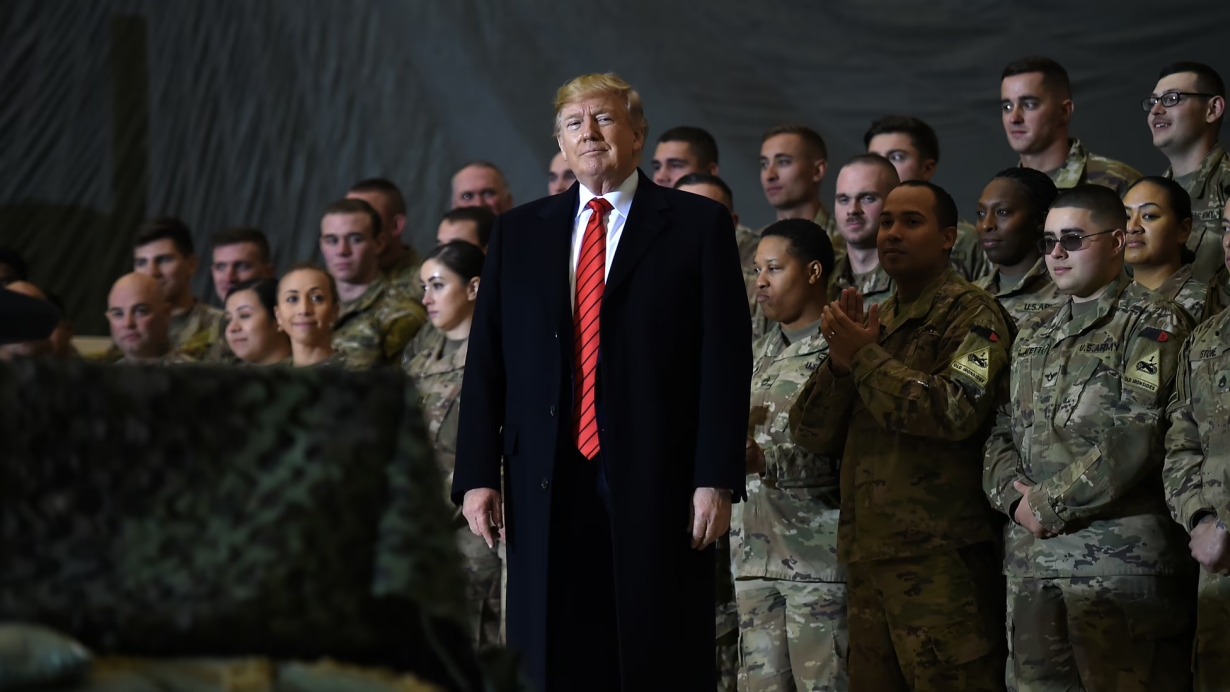
Donald Trump finally got the kind of military spectacle he had wanted for years, and it just so happened to land on his 79th birthday.
What a mysterious coincidence. Truly one for the historians. Somewhere, an archivist has fainted into a pile of red, white and blue bunting.
The parade, held in Washington, D.C., was billed as a celebration of the Army’s long history. But because this is modern American politics, even a birthday party for a military branch immediately became a national argument about money, symbolism, protest, authoritarian imagery and whether the commander in chief needed a taxpayer funded backdrop with armored vehicles to feel sufficiently appreciated.
The event reportedly cost between $25 million and $45 million. It included thousands of troops, tanks, military vehicles and aircraft. It came during a period when the administration was also pushing government cuts elsewhere, because apparently austerity is for social services, not rolling metal confidence down city streets.
The parade was real. The cost was real. The backlash was real.
The only thing still unclear is whether America has learned anything from watching public spectacle repeatedly crash into public frustration, or whether the country has simply accepted that politics is now a reality show with worse lighting and more legal exposure.
The Army Had A Birthday. Trump Found A Mirror.
To be fair, the U.S. Army’s 250th anniversary is a legitimate historical milestone. The Army was founded in 1775. It has been central to American history, war, defense, national identity and every movie trailer where a flag appears in slow motion.
A serious national commemoration could have focused on service members, military families, veterans, battlefield sacrifice, institutional history and the complicated reality of American power.
Instead, the event immediately became inseparable from Trump.
That was not only because critics wanted to make it about him. It was because the parade happened on his birthday, after years of his public fascination with military pageantry. Trump had previously floated the idea of a major military parade during his first term after seeing France’s Bastille Day celebration. That earlier plan was eventually shelved after cost concerns and political criticism.
The 2025 parade gave him the spectacle anyway.
Officially, the event honored the Army.
Visually, politically and emotionally, it looked like something much closer to Trump finally checking an item off his personal bucket list.
Some people want a cake. Some want dinner with family. Some want a thoughtful card. Trump apparently wanted armored vehicles in the capital.
Minimalist, really.
The Cost Problem
The parade’s estimated cost, somewhere between $25 million and $45 million, became one of the central criticisms.
Supporters argued that the Army deserved a major celebration. They said the money was justified by the scale of the anniversary, the patriotic value of the event and the chance to honor service members. In a normal country, this would be the cleanest version of the argument.
But the problem was not only the number.
It was the timing.
The parade happened in an administration loudly associated with cuts, budget fights and lectures about waste. Americans were being told, once again, that the government must tighten belts, reduce spending, eliminate inefficiency and make tough choices.
Then came the tanks.
Nothing says fiscal discipline like spending millions so armored vehicles can perform democracy cosplay through Washington.
An AP-NORC poll found that most U.S. adults did not view the parade as a good use of government money. That is not shocking. Americans disagree on almost everything now, including weather, illness, elections, history and sometimes whether reality itself has valid paperwork. But give them a huge military parade with a giant bill and many suddenly remember arithmetic.
The parade may have been legal. It may have been approved. It may have had institutional justification.
But politically, it asked a brutal question:
If there is money for pageantry, why is there never enough money for the people pageantry claims to honor?
Veterans’ services. Military families. Housing. Health care. Mental health support. Pay. Infrastructure. Disaster response. Schools. Hospitals. These are not as cinematic as tanks under a capital skyline, which is exactly the problem.
A country can honor soldiers by improving their lives.
Or it can honor them by staging a spectacle around leadership.
Guess which one fits better on television.
The Optics Were Not Exactly Subtle
Military parades are not automatically authoritarian. Countries around the world hold them for national holidays, anniversaries and major commemorations. The U.S. itself has held large military parades before, including after the Gulf War in 1991.
But context matters.
A military parade in Washington on the president’s birthday, during a period of intense political polarization, after years of Trump openly admiring grand displays of state power, was never going to read as neutral.
The optics were heavy. Literally.
Tanks on city streets do not whisper.
They announce.
They create images of force, discipline, hierarchy and command. That symbolism can be solemn in the right context. It can also feel theatrical, especially when attached to a leader whose political brand already leans toward dominance, spectacle and never allowing the camera to forget who the main character is.
That was the real tension.
The Army deserved a celebration.
Trump wanted a show.
The public got both, fused together into one expensive visual essay titled “Please Clap, But With Artillery.”
The parade forced Americans to watch two narratives at once. One was about military history. The other was about presidential self staging. One honored an institution older than the republic itself. The other seemed tailored to a president who has never met a spotlight he believed was wide enough.
That is the problem with spectacle. It does not stay obedient. It absorbs whatever meaning surrounds it.
And around this parade, there was a lot of meaning.
The Protesters Understood The Assignment
While the parade unfolded in Washington, protests under the “No Kings” banner took place across the country. Organizers and participants argued that the parade symbolized Trump’s authoritarian tendencies and a dangerous personalization of power.
Supporters dismissed the protests as overblown, partisan and disrespectful to the Army.
But the slogan worked because it cut directly into the unease.
“No Kings” was simple. It was blunt. It was almost offensively on the nose, which is useful in a country where subtlety died sometime between cable news panels and comment sections.
The protesters were not objecting to soldiers having a birthday. They were objecting to the image of military power being wrapped around a president who already treats politics like a personal loyalty test.
That distinction matters.
You can respect the military and still question how politicians use it.
You can honor service members and still object to armored pageantry on a president’s birthday.
You can believe in national defense without wanting domestic politics to look like a trailer for a regime that has banned irony.
In fact, those positions fit together rather well.
The military is supposed to serve the Constitution, not a personality brand.
That should not be controversial. But again, this is America, where even a sandwich can become a constitutional crisis if the right cable segment finds it.
Supporters Saw Patriotism. Critics Saw Performance.
For Trump’s supporters, the parade represented strength. It was a celebration of the Army, the flag, national pride and military history. They saw critics as bitter people who cannot let America celebrate anything without dragging politics into it.
That argument has emotional appeal. There is something exhausting about a country so divided that even a military anniversary becomes a fight.
But the counterargument is obvious.
Trump is not some random president accidentally caught near symbolism. He is a professional symbol manipulator. His political career is built on staging, dominance, grievance, loyalty and spectacle. He understands images. He understands crowds. He understands the emotional power of big visuals and simple messages.
So when a military parade happens on his birthday, after he spent years wanting one, critics are not hallucinating when they see ego in the frame.
They are reading the room.
And the room had tanks in it.
The deeper issue is not whether patriotism is allowed. It is whether patriotism keeps being turned into decoration for political power.
Patriotism is supposed to belong to the country.
In modern politics, it is too often rented out by whoever can afford the largest flag.
The Birthday Coincidence Nobody Believed
The administration and defenders of the event could point to the Army anniversary. That is real. The Army was founded on June 14. The date matters.
But June 14 is also Trump’s birthday.
That overlap was always going to dominate coverage because it is too symbolically perfect. A military parade. A president obsessed with showmanship. A birthday. A national capital. Tanks. Aircraft. Public cost. Protesters shouting “No Kings.”
If a screenwriter pitched this, an editor would say it was too obvious.
Trump did not invent the Army’s founding date. But he did benefit from the coincidence, and the spectacle fit his political persona so neatly that even neutral observers could see the problem.
The event created the impression of a national institution being bent into the shape of one man’s self image.
That is dangerous even when nothing technically illegal happens.
Democracies depend not only on rules, but on restraint. Norms matter. Optics matter. The careful separation between the military and partisan politics matters.
When leaders blur that line, they may insist it is harmless.
But every democracy that slides into weirdness begins with someone saying everyone is being too dramatic.
The Military Deserved Better Than Being Turned Into A Prop Debate
One of the saddest parts of the whole event is that the soldiers themselves were not the problem.
The troops who participated were doing their jobs. The Army’s history is real. The service of military families is real. The sacrifices of veterans are real. The anniversary deserved recognition.
But political staging turned the celebration into another Trump referendum.
That is unfair to the institution and to the people serving in it.
A serious commemoration would have centered the Army. It would have given the country space to reflect on service, war, sacrifice, civil military relations and the difficult role of armed forces in a democracy.
Instead, the public spent much of the day arguing about Trump’s ego, the cost of the event and whether America was watching patriotic celebration or authoritarian flavored pageantry.
That is what happens when leaders absorb every institution around them.
The military becomes a backdrop.
The flag becomes a branding asset.
The anniversary becomes an episode.
The soldiers march, and the politician takes the meaning.
A Country That Cannot Agree On The Meaning Of A Parade
The parade revealed something bigger than Trump.
America cannot agree on what its symbols mean anymore.
For some, tanks in Washington looked like strength.
For others, they looked like insecurity wearing steel.
For some, the parade honored service.
For others, it turned service into scenery.
For some, the protests were disrespectful.
For others, the protests were the most American thing happening that day.
That split is the story.
The United States is approaching major national anniversaries while deeply divided over democracy, history, power, identity and who gets to define patriotism. A military parade could have been a unifying moment. Instead, it became a split screen: celebration in one frame, protest in the other.
The parade did not create that division.
It revealed it.
It showed a country where one side sees criticism as betrayal and the other sees spectacle as warning sign. It showed a government trying to project unity while citizens argued over whether the projection itself was the problem.
It showed, once again, that America has become very good at staging national symbols and very bad at agreeing what they are for.
The Ego Question
Now to the least subtle part.
Was this about ego?
Officially, no.
Politically, please.
Trump has long understood the power of spectacle. His rallies, entrances, slogans, branding instincts and obsession with crowd size all come from the same operating system. He likes politics big, loud and centered on him. The parade fit that system beautifully.
This does not mean every person involved in planning the event had corrupt motives. It does not mean the Army anniversary was fake. It does not mean everyone attending was worshiping Trump.
But it does mean the event became trapped inside his personality.
That is the gravitational problem of Trump politics. Everything near him gets pulled into the orbit of Trump. Institutions, holidays, legal cases, media coverage, elections, weather maps, dinner menus, probably office furniture if it waits long enough.
So even when the Army is supposed to be the subject, Trump becomes the headline.
That is not an accident.
It is the design.
The Real Cost Was Not Just Money
The parade cost tens of millions. That number matters.
But the deeper cost was institutional.
When the military is used in a way that looks personalized around a president, public trust takes damage. When public money funds spectacles that many citizens see as self promotion, civic trust takes damage. When patriotic celebration becomes indistinguishable from political theater, national symbols take damage.
These costs do not show up neatly in a budget line.
They show up later, when people stop believing public institutions belong to everyone.
They show up when the flag becomes partisan wallpaper.
They show up when honoring the military becomes less about service and more about proving loyalty to a political figure.
That is the danger.
Not one parade.
The pattern.
A Parade With Tanks, Fireworks And A Very Fragile Message
The message the administration wanted was strength.
The message many Americans received was insecurity.
Strength does not need constant staging. Real confidence does not require tanks to roll past the leader on his birthday. Stable democracies do not need to keep proving they are strong by borrowing imagery from countries whose leaders put sunglasses on indoors.
A nation can honor its military without making the event feel like a presidential mood board.
A president can celebrate the Army without turning the whole thing into a personality weather system.
And a government can spend money on public commemoration without making half the country wonder whether the invoice should be filed under “defense,” “politics,” or “emotional support vehicles.”
Trump’s military parade was officially a celebration of the U.S. Army’s 250th anniversary.
It was also a reminder that in modern American politics, even a parade cannot simply be a parade.
It must become a loyalty test, a culture war, a spending fight, a protest trigger, a branding exercise and a mirror held up to a country that keeps mistaking volume for unity.
The Army turned 250.
Trump got his spectacle.
The country got another argument.
At this point, that may be the most American ending possible.